Ooni Halo Pro Review: Is a $799 Spiral Mixer Worth It?
The Halo Pro brings a genuine spiral mixing action, rotating bowl plus fixed hook plus breaker bar, into a machine you can lift onto a kitchen counter, and on stiff low hydration pizza dough it develops gluten better and cooler than any tilt-head planetary mixer. Buy it if you mix dough most weeks, in batches of six pizzas or more, and you already own an oven that reaches 850F. Skip it if your pizza still comes out of a 550F domestic oven, because at that point $799 spent on a mixer improves the part of the process that was not the problem.
A professional mixing action in a domestic body, and the hardest purchase on this site to justify.
Specifications
| Mixing action | Spiral: rotating bowl, fixed spiral hook, removable breaker bar |
|---|---|
| Bowl capacity | 7.3 quarts |
| Speed settings | 58, from 60 RPM to over 1,000 RPM |
| Attachments included | Breaker bar, spiral dough hook, flexible beater, geared whisk |
| Also does | Whisking and beating, so cakes, cookies, whipped cream and frosting |
| Listed price | $799.00 |
Specifications above come from Ooni's published product specifications. Treat pricing as approximate, since Amazon pricing moves.
What it does well
- The spiral action is the real thing rather than a marketing word. The bowl turns while a fixed hook works one section at a time, so the dough is folded through itself continuously instead of being dragged around a static bowl.
- It runs cool. Friction is what raises final dough temperature during mixing, and a spiral hook working a small section at a time puts far less of it in than a planetary hook fighting a whole mass.
- 58 speeds is not a spec sheet flourish. Sixty RPM is slow enough to hydrate flour without splashing, and the top of the range is fast enough to whip, which is what makes the machine more than a dough tool.
- It handles low hydration dough without complaint, which is exactly where a tilt-head planetary mixer starts to lift its own head off the bowl.
Where it falls short
- It costs $799, which is more than every oven on this site except one. That is the honest headline and it should be the first thing you weigh.
- A spiral mixer is built around dough. The beater and whisk are real and they work, but nobody buys a spiral mixer to whip cream, and if general kitchen duty is the main job a planetary mixer is the better machine.
- Small batches suit it badly. A spiral hook needs enough dough in the bowl to form a mass it can work, so a single 250 g ball is close to useless in a 7.3 quart bowl.
- It is large and heavy enough to want a permanent home. Counter space is the scarcest resource in most kitchens and this machine claims a lot of it.
- It will not improve a pizza that is being held back by a 550F oven floor. Mixing is not the bottleneck in most home pizza, and this is the most expensive way to fix the wrong problem.
What owners report
The consensus across published owner reviews is unusually consistent on one point: people who make dough in quantity describe a clear step up in how the dough behaves, and people who make one or two pizzas at a time describe an expensive machine doing very little. Both groups are reporting the same thing. A spiral mixer is a batch tool, and the advantage scales with the size of the batch.
The second recurring theme is dough temperature. Owners who track final dough temperature report it landing closer to where they aimed than it did with a planetary mixer, which matters because final dough temperature drives fermentation speed more than anything else you control. If you are working to a cold ferment schedule, that consistency is the practical benefit rather than the gluten development everybody talks about. Work the schedule out on the proof time calculator and you will see how much a few degrees moves it.
Who it suits
- People mixing six to sixteen dough balls at a time, most weeks, for a household or a small side operation.
- Bakers who already run a cold ferment schedule and want final dough temperature to land where they aimed.
- Anyone working stiff, low hydration doughs where a tilt-head mixer visibly struggles.
- Owners of a 850F or hotter oven, where dough quality is genuinely the next limiting factor.
Who should skip it
- Anyone still baking on a domestic oven rack. Buy a baking steel and then an oven first, in that order.
- People who make one or two pizzas at a time. The bowl is too big for the batch and the machine will underperform a hand mix with folds.
- Households that want one machine for everything. A planetary mixer is more versatile and much cheaper.
- Anyone without a permanent counter space for it, because a mixer that lives in a cupboard does not get used.
Alternatives worth considering
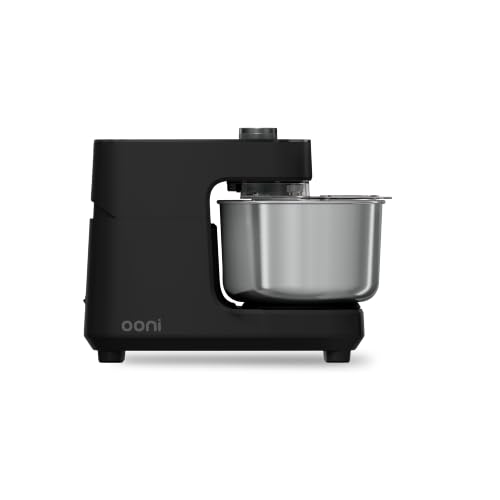
Ooni Halo Core Spiral Dough Mixer, 4.8 Quart
$599.00
The same spiral action and removable breaker bar in a machine Ooni states is 25 percent smaller and 30 percent lighter, at 12.28 inches tall and 23.2 lb. For a household batch it is the more sensible of the two, and it saves $200.
Check price on Amazon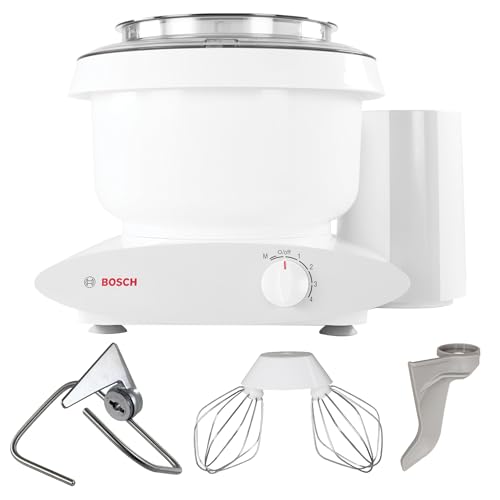
Bosch Universal Plus Stand Mixer, 6.5 Quart, 500 Watt
$499.00
A bottom drive belt driven planetary machine rated by the manufacturer for up to 15 lb of whole grain bread dough, which is far more dough than either Ooni will take. It is less refined and the bowl is plastic, but for sheer volume per dollar nothing here comes close.
Check price on Amazon
KitchenAid Classic Series 4.5 Quart Tilt-Head Stand Mixer K45SS
$399.00
Half the price, and for two to six dough balls at a time it makes pizza dough that is difficult to tell apart from spiral mixed dough once it has fermented. Mix on speed 1 to 2 only and keep batches modest.
Check price on AmazonWhere it fits in the rest of the kit
A mixer is the last purchase in a pizza setup rather than an early one, and the order matters more than the brand. If you are still baking on an oven rack, a baking steel will change your pizza more than $799 of mixer will, and the home oven steel versus outdoor oven comparison sets out exactly what the extra 350F of floor temperature buys. Once the bake is sorted, the mixer is the thing that makes the dough repeatable.
Before deciding whether a 7.3 quart bowl is right for you, work out what a real batch actually weighs. The dough ball weight calculator sizes the balls for the pizza your oven can cook, and the hydration calculator turns a ball count into flour, water, salt and yeast to a tenth of a gram. Dough weight scales with pizza area rather than diameter, so a batch of eight 15 inch pizzas is far heavier than the same count of 12 inch ones. If the numbers come out smaller than you expected, the Halo Core is the better machine and the KitchenAid Classic is the cheaper one. The dough mixer roundup ranks all of them by tier, and stand mixer versus food processor covers the cheapest route to the same dough.
Keep reading
- Best dough mixers for pizza, by tier
- Stand mixer vs food processor for dough
- Dough hydration calculator
- Cold fermentation guide
- Ooni Halo Core review
- KitchenAid Classic K45SS review
This review draws on published specifications, manufacturer figures and the consensus of verified owner reviews. We have not tested this product ourselves, and we say so rather than implying otherwise. As an Amazon Associate we earn from qualifying purchases.
Frequently asked questions
Is a spiral mixer actually better than a KitchenAid for pizza dough?
For large or stiff batches, yes, and for a small batch the difference is hard to find. A spiral mixer turns the bowl and works one section of dough at a time against a fixed hook, which develops gluten with less friction and less heat than a planetary hook dragging a whole mass around a static bowl. That advantage grows with batch size. At two or three dough balls, a tilt-head mixer on a low speed produces dough that ferments and bakes essentially the same.
How many pizza dough balls will the Ooni Halo Pro handle?
The bowl holds 7.3 quarts, which comfortably covers a family sized batch and then some. The more useful limit is at the bottom rather than the top: a spiral hook needs enough dough to form a mass, so very small batches simply spin around the bowl without being worked. If you routinely make two pizzas at a time this is the wrong machine, and the smaller Halo Core suits that batch size much better.
Does the Halo Pro do anything besides dough?
Yes. It ships with a flexible beater and a geared whisk alongside the spiral hook and the removable breaker bar, and the top of its 58 speed range is fast enough to whip cream and beat batters. That said, nobody should buy a $799 spiral mixer for cake duty. If general kitchen versatility is the main job, a planetary mixer does it better for a fraction of the money.
Will a better mixer improve my pizza?
Only if mixing is what is currently holding it back, and usually it is not. The two things that decide a home pizza are floor temperature and fermentation. If you are baking at 550F on an oven rack, no mixer will produce a puffed and blistered rim, because a 90 second bake needs a 900F floor. Fix the baking surface first, then the oven, and treat the mixer as the last upgrade rather than the first.
Ooni Halo Pro or Halo Core: which should I buy?
Buy the Core unless you genuinely mix in bulk. Ooni states the Core is 25 percent smaller and 30 percent lighter at 12.28 inches tall and 23.2 lb, with the same spiral action and removable breaker bar, for $200 less. The Pro earns its price on larger batches, a bigger bowl and a wider 58 setting speed range. For a household making eight pizzas on a weekend, the Core is the better buy.
How we choose: we compare published manufacturer specifications, verified owner reviews, and long-established baker's percentage practice. We do not test gear in person. Dough figures are guidance, not a recipe guarantee: flour, water and room conditions all vary, so read your dough as well as the numbers.
Heat safety: a pizza oven at working temperature holds a 700F to 950F floor and a shell hot enough to burn on contact. Use long-handled peels and heat-rated gloves, keep children and pets clear, burn fuel outdoors only with clearance from anything combustible, and never pour water on a hot baking stone. Water flashes to steam instantly and thermal shock cracks stone.
Keeping your own dough and bake numbers? The Dough & Oven Planner is the paid version of these pages: 8 printable worksheets you fill in with your own numbers, plus the full PDF, $29.