KitchenAid Classic K45SS Review: Good Enough for Pizza?
For two to six dough balls at a time the KitchenAid Classic makes pizza dough that is genuinely hard to tell apart from spiral mixed dough once it has fermented, and it does everything else in the kitchen as well, which is why it is the sensible default. Buy it if you make pizza for a household and want one machine rather than a specialist. Skip it if you regularly mix stiff dough in bulk, because a tilt-head mixer at its limit lifts its own head and labours, and no technique fixes that.
The default kitchen mixer, and what it will and will not do with pizza dough.
Specifications
| Type | Tilt-head planetary mixer |
|---|---|
| Bowl | 4.5 quart stainless steel, dishwasher safe |
| Speeds | 10, from stir to speed 8 whipping |
| Construction | Metal, with 59 touchpoints stated around the bowl |
| In the box | Bowl, coated flat beater, coated dough hook, 6 wire whip |
| Attachment ecosystem | 10 plus optional attachments, sold separately |
| Listed price | $399.00 |
Specifications above come from KitchenAid's published specifications for the K45SS. Treat pricing as approximate, since Amazon pricing moves.
What it does well
- It is the most versatile machine in this group by a distance. Dough is one job among many, and the attachment hub turns it into a pasta roller, a grinder and more.
- Small batches suit it, which is the exact opposite of the bulk machines. Two or three dough balls is comfortable territory.
- Ten speeds with a genuinely slow stir setting, which is the only speed you should mix pizza dough on anyway.
- The bowl is stainless and dishwasher safe, so a sticky 65 percent hydration dough is not a cleaning problem.
- Parts, bowls, beaters and hooks are available everywhere, which is not a small thing for a machine you intend to own for twenty years.
Where it falls short
- It is a tilt-head machine and stiff dough is what tilt-head machines are worst at. Overload the bowl and the head lifts, the hook rides up and the dough stops being worked.
- KitchenAid's stated capacity figure is a cookie figure, 8 dozen at 28 g each using the flat beater, not a pizza dough figure. Do not read it as a dough rating.
- A planetary hook drags the dough around a static bowl, which puts friction and therefore heat into it. On a warm day that is enough to move your fermentation schedule.
- The listed price of $399 is one you should very rarely pay. This model has been in production for decades and is discounted heavily and often, so check before buying at list.
- The dough hook is coated rather than bare metal, and owners who work stiff dough hard report coating wear over years of use.
What owners report
The K45SS has been sold for long enough that owner consensus is about as settled as it gets. Two things come up repeatedly and both are about dough rather than the rest of the machine. The first is longevity: people report using the same mixer for fifteen or twenty years, which is the strongest argument for buying it. The second is that heavy dough is where owners run into trouble, and the reports describe exactly the failure mode you would predict, a head that lifts under load and a hook that climbs.
The practical advice that comes out of those reports is consistent and worth following: mix pizza dough on speed 1 or 2 only, keep the batch modest, and rest the dough for a few minutes mid-mix if the machine is fighting you. Work your batch out on the dough ball weight calculator before you decide whether it fits, because dough weight scales with pizza area rather than diameter and a 16 inch batch is much bigger than it looks.
Who it suits
- Households making two to six pizzas at a time.
- Anyone who wants one machine that also creams butter, whips egg whites and takes a pasta roller.
- Kitchens where the mixer has to look like it belongs on the counter.
- Anyone buying their first real mixer, since this is the cheapest way into a platform that lasts decades.
Who should skip it
- Bulk bakers. Above about 1.5 kg of stiff dough this is the wrong machine and the Bosch Universal Plus is the right one.
- Anyone chasing the lowest possible final dough temperature, where a spiral mixer wins clearly.
- People who only make pizza and never bake anything else, for whom a $199 food processor with a dough blade is faster and cheaper.
- Anyone about to pay full list price without checking, because this model is discounted very frequently.
Alternatives worth considering
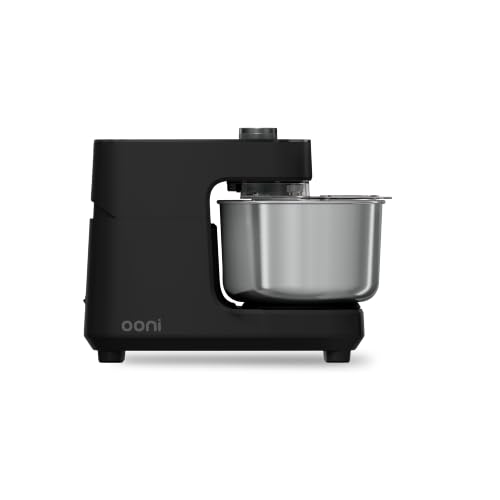
Ooni Halo Core Spiral Dough Mixer, 4.8 Quart
$599.00
A true spiral action with a rotating bowl and removable breaker bar, which develops gluten with less friction and holds final dough temperature closer to target. It is $200 more and far less versatile outside dough.
Check price on Amazon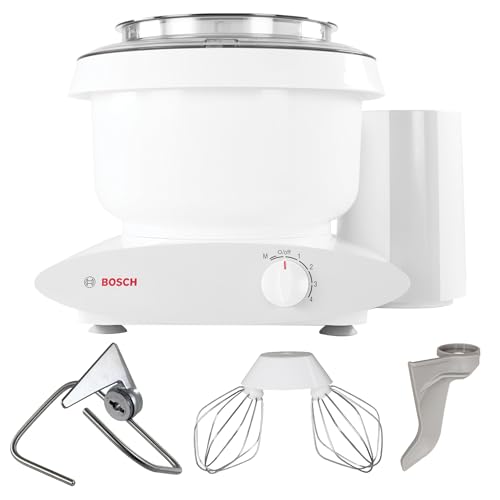
Nutrimill Bosch Universal Plus Stand Mixer, 6.5 Quart, 500 Watt
$499.00
Bottom drive and belt driven, rated by the manufacturer for up to 15 lb of bread dough. It is the answer to every batch size that makes a tilt-head mixer lift its head, and the trade is a plastic bowl and no elegance at all.
Check price on Amazon
Cuisinart Pro Custom 11 Food Processor, 11 Cup, 625 W
$199.95
Half the price and it brings dough together in under a minute with the supplied dough blade. It heats the dough noticeably in that minute, so use iced water and check the finished temperature, but for a weeknight same day dough it is the faster tool.
Check price on AmazonWhere it fits in the rest of the kit
The single most useful thing you can do before buying any mixer is find out how much dough you actually make. The dough ball weight calculator gives you a total in grams from a pizza count and a diameter, and a 4.5 quart bowl comfortably covers roughly 1 to 1.5 kg of finished pizza dough. Above that, the Bosch Universal Plus is the machine that stops complaining, and for cooler, gentler mixing at modest volumes the Ooni Halo Core is the specialist.
If the price is the sticking point, read stand mixer versus food processor for dough before committing, because a $199 food processor makes a perfectly good same day dough in under a minute. The dough mixer roundup covers the whole category by tier. And whichever machine mixes it, the schedule afterwards is what makes the pizza: the proof time calculator and the cold fermentation guide matter more to the finished crust than the mixer does.
Keep reading
- Stand mixer vs food processor for dough
- Best dough mixers for pizza, by tier
- Dough ball weight calculator
- Cuisinart Pro Custom 11 review
- Ooni Halo Core review
- How to make Neapolitan pizza dough
This review draws on published specifications, manufacturer figures and the consensus of verified owner reviews. We have not tested this product ourselves, and we say so rather than implying otherwise. As an Amazon Associate we earn from qualifying purchases.
Frequently asked questions
Can a KitchenAid Classic handle pizza dough?
Yes, within limits. For two to six dough balls on speed 1 or 2 it does the job well and the finished dough after a cold ferment is very hard to distinguish from spiral mixed dough. The limit is load: a tilt-head mixer with too much stiff dough in the bowl will lift its own head and the hook will ride up out of the mass. Keep batches modest and the machine will last decades.
What speed should I mix pizza dough on?
Speed 1 to 2, and no higher. Pizza dough is stiff and low hydration compared with cake batter, and running a stand mixer fast under that load strains the gears and puts friction heat into the dough. Slow mixing also lets you watch the dough come together and stop when the gluten is where you want it rather than when a timer says so.
How much dough will fit in a 4.5 quart bowl?
Comfortably, around 1 to 1.5 kg of finished pizza dough, which is four to six 250 g Neapolitan balls. KitchenAid's own headline capacity figure is for cookies using the flat beater rather than for dough, so do not read 8 dozen cookies as a dough rating. If you routinely need more than six balls, buy a bigger machine rather than pushing this one.
Is the KitchenAid Classic worth $399?
At full list, rarely. This model has been in production for decades and is discounted often and deeply, so the honest advice is to watch the price rather than pay list. At a discounted price it is one of the better value purchases in a home kitchen, because it does far more than pizza dough and it lasts.
KitchenAid Classic or a food processor for pizza dough?
The mixer, if pizza dough is the point, because you can add water gradually and watch the gluten develop. The food processor, if speed and a lower price matter more, because it brings dough together in around 45 seconds. The processor's real drawback is heat: it raises final dough temperature noticeably in that short time, which will move a fermentation schedule if you do not use cold water. We set them against each other in full.
How we choose: we compare published manufacturer specifications, verified owner reviews, and long-established baker's percentage practice. We do not test gear in person. Dough figures are guidance, not a recipe guarantee: flour, water and room conditions all vary, so read your dough as well as the numbers.
Heat safety: a pizza oven at working temperature holds a 700F to 950F floor and a shell hot enough to burn on contact. Use long-handled peels and heat-rated gloves, keep children and pets clear, burn fuel outdoors only with clearance from anything combustible, and never pour water on a hot baking stone. Water flashes to steam instantly and thermal shock cracks stone.
Keeping your own dough and bake numbers? The Dough & Oven Planner is the paid version of these pages: 8 printable worksheets you fill in with your own numbers, plus the full PDF, $29.