Unicook 15 Inch Square Pizza Stone Review: Cheap and Honest
At $45.99 for a 0.57 inch thick, 8 lb cordierite slab rated to 1,450F, this is the cheapest baking surface on the site that is genuinely worth owning, and the square format gives you more usable area than a round stone of the same nominal size. Buy it if you want a large improvement on a bare oven rack without spending $139. Skip it if browning the base is your main complaint, because steel conducts heat into dough far faster than cordierite and that is exactly what a pale base needs.
The cheapest baking surface worth owning, and the one job it does worse than steel.
Specifications
| Dimensions | 15 x 15 in |
|---|---|
| Thickness | 0.57 in, given as 14.5 mm |
| Weight | 8 lb |
| Material | Cordierite, sintered at 2,100F |
| Heat resistance | Rated to 1,450F |
| Use | Oven or grill |
| Included | Multi-purpose plastic scraper |
| Cleaning | No soap or detergent, no oil seasoning |
| Listed price | $45.99 |
Specifications above come from Unicook's published product specifications. Treat pricing as approximate, since Amazon pricing moves.
What it does well
- Square beats round for the same nominal size. A 15 inch square gives you the corners, which is where a second flatbread, a tray of rolls or a loaf ends up.
- 0.57 inches is a genuinely useful thickness for cordierite. Thin stones exist at this price and they hold almost no heat.
- The porous structure pulls moisture out of the base as it bakes, which is the property that separates a stone from a metal pan.
- At 8 lb it is light enough to lift in and out of an oven, which a 17 lb steel is not.
- Rated to 1,450F, so it is usable on a grill and in an outdoor oven as well as in a domestic one.
Where it falls short
- Cordierite conducts far less heat than steel. If your complaint is a pale, soft base, a steel is the answer to that specific problem and a stone is not.
- It can crack, and thermal shock is how. A cold stone into a hot oven, a wet stone into a hot oven or water onto a hot stone will all do it.
- It cannot be washed with soap or seasoned with oil. Unicook says so explicitly. It cleans by scraping and by burning off, and it will stain permanently.
- It stains and looks dreadful within a few bakes. That is normal and it is not a defect, but people are regularly surprised by it.
- Like every baking surface, it is capped by the oven. It will not produce Neapolitan pizza at 550F.
What owners report
Cordierite stones at this price have a long track record and the owner consensus is stable: they work, they discolour immediately, and the ones that fail almost always failed to thermal shock rather than to wear. The reports that describe a cracked stone very often also describe either a cold stone going into a preheated oven or the stone being washed while hot, both of which are the documented ways to break one.
The other consistent theme is expectation. People who bought a stone hoping for a crisp, deeply browned base sometimes report disappointment, and the reason is material rather than manufacturing. Steel moves heat into dough much faster than cordierite does. Our stone versus steel comparison covers the physics without the marketing, square versus round covers the format, and the stone care guide covers keeping one alive.
Who it suits
- Anyone currently baking pizza on a bare oven rack or a thin metal tray.
- People who want a baking surface they can lift out, since 8 lb is manageable and a steel is not.
- Grill users, since the 1,450F rating covers temperatures a domestic oven never reaches.
- Bread bakers who want gentler base browning than steel gives.
Who should skip it
- Anyone whose specific complaint is a pale or soggy base, which is a conduction problem that steel solves and cordierite does not.
- People cooking several pizzas in a row, where a thicker steel recovers much faster.
- Anyone who cannot commit to letting the stone heat and cool with the oven, since thermal shock is what kills them.
- Buyers expecting it to stay clean and presentable.
Alternatives worth considering

ThermiChef 16 x 16 in Pizza Steel, 1/4 in, 17.6 lb
$73.99
$28 more for a material that conducts heat into dough far faster and cannot crack. If a crisp browned base is the goal rather than a general improvement, this is the upgrade that delivers it.
Check price on Amazon
Unicook 15 in Round Cordierite Pizza Stone
$42.73
The same stone in a round format for $3 less. Round loses you the corners, which is real usable area, and it gains a shape that suits a round pizza and a round grill better. For an oven, square is the better buy.
Check price on Amazon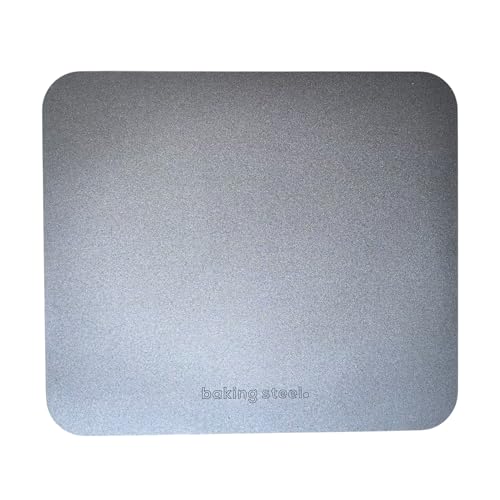
Baking Steel The Original Baking Steel, 14 x 16 x 1/4 in
$139.00
Three times the price, pre-seasoned and effectively indestructible. It is the best baking surface you can put in a domestic oven, and the honest note is that it still cannot make Neapolitan pizza at 550F.
Check price on AmazonWhere it fits in the rest of the kit
The format question is settled quickly: square versus round pizza stone covers why a 15 inch square gives you meaningfully more usable area than a 15 inch circle, and why round still makes sense on a kettle barbecue. The material question is the bigger one, and stone versus steel is the page to read if your bases come out pale, because that is a conduction problem that cordierite cannot fix.
Keeping a stone alive is mostly about not shocking it. The stone care guide covers cleaning without soap and heating without cracking, and the bake temperature and time calculator sets expectations for how long a stone takes to come up to temperature, which is far longer than the oven's own ready light suggests. If you decide steel is the answer after all, the ThermiChef 16 inch steel is $28 more and the pizza stone roundup has the rest of the cordierite field.
Keep reading
- Square vs round pizza stone
- Pizza stone vs pizza steel
- Best pizza stones, by tier
- How to season and clean a pizza stone
- ThermiChef 16 inch pizza steel review
- Bake temperature and time calculator
This review draws on published specifications, manufacturer figures and the consensus of verified owner reviews. We have not tested this product ourselves, and we say so rather than implying otherwise. As an Amazon Associate we earn from qualifying purchases.
Frequently asked questions
Square or round pizza stone: which is better?
Square, for an oven, because a 15 inch square has substantially more usable area than a 15 inch circle and the corners take a second flatbread, a tray of rolls or a loaf. Round makes sense on a round grill or a kettle barbecue where the shape has to match, and it is marginally easier to rotate a pizza on. For a rectangular domestic oven, square wins on area alone.
Why did my pizza stone crack?
Almost certainly thermal shock. Cordierite tolerates high temperatures well and sudden changes in temperature badly. Putting a cold stone into a preheated oven, running water onto a hot stone, or washing a stone before it has cooled will all crack one. Heat it with the oven from cold, let it cool in the oven, and never pour water on it. Water flashes to steam instantly, the steam scalds, and the shock breaks the stone.
How do you clean a cordierite pizza stone?
Scrape it cold with the supplied plastic scraper and burn the rest off at high heat. Unicook is explicit that you should never use soap or detergent, because the porous structure absorbs it and you will taste it in the next pizza, and never season it with oil, which is a steel and cast iron practice rather than a cordierite one. It will stain dark and blotchy within a few bakes, which is cosmetic and permanent.
Is a pizza stone good enough, or do I need a steel?
It depends what is wrong with your pizza. If you are baking on a bare rack, a stone is a large improvement and $45.99 is excellent value. If your base is pale and soft after a proper preheat, that is a conduction problem, and steel moves far more heat per second into the dough than cordierite can. The honest answer is that a stone is the cheap upgrade and a steel is the right one for base browning.
Can you use this stone in a pizza oven or on a grill?
Yes. Unicook rates it to 1,450F, which is well above anything a domestic oven produces and above the working floor temperature of most outdoor pizza ovens. On a grill, heat it up with the grill rather than placing it onto an already hot surface. In an outdoor oven, check the stone fits with clearance around it, since a stone wedged against the chamber walls cannot expand.
How we choose: we compare published manufacturer specifications, verified owner reviews, and long-established baker's percentage practice. We do not test gear in person. Dough figures are guidance, not a recipe guarantee: flour, water and room conditions all vary, so read your dough as well as the numbers.
Heat safety: a pizza oven at working temperature holds a 700F to 950F floor and a shell hot enough to burn on contact. Use long-handled peels and heat-rated gloves, keep children and pets clear, burn fuel outdoors only with clearance from anything combustible, and never pour water on a hot baking stone. Water flashes to steam instantly and thermal shock cracks stone.
Keeping your own dough and bake numbers? The Dough & Oven Planner is the paid version of these pages: 8 printable worksheets you fill in with your own numbers, plus the full PDF, $29.