ThermiChef 16 Inch Pizza Steel Review: More Steel, Less Money
A 16 by 16 inch quarter inch plate at $73.99 gives you more cooking area than the $139 Baking Steel for roughly half the money, and the only thing you give up is the pre-seasoning, which is one hour of your time. Buy it if you want the most baking surface per dollar and your oven has the depth for a 16 inch plate. Skip it if your oven is compact or European sized, where a 14 inch steel is the sensible choice, and skip the quarter inch for the 3/8 if you cook four pizzas in a row rather than one.
Two extra inches and half the price, in exchange for seasoning it yourself.
Specifications
| Dimensions | 16 x 16 x 1/4 in |
|---|---|
| Weight | 17.6 lb |
| Material | Low carbon steel, CNC laser cut from a single piece |
| Manufacture | Made in the USA, in Minnesota |
| Finish as shipped | Shot-blasted, not pre-seasoned |
| Seasoning | Wash, thin coat of oil, bake at 375F for one hour |
| Largest pizza | Stated up to 15 in diameter |
| Manufacturer heat claim | Stated as up to 20 times the heat conduction of a ceramic stone |
| Coatings | None, stated free of Teflon and PFAS |
| Listed price | $73.99 |
Specifications above come from ThermiChef's published product specifications. Treat pricing as approximate, since Amazon pricing moves.
What it does well
- It is the cheapest way to get a large steel baking surface, and area is the specification most people underestimate when they buy their first plate.
- Quarter inch is the right default thickness for most people: enough heat capacity for a real base, light enough at 17.6 lb to actually move.
- No coatings at all, so there is nothing to chip, flake or wear off. It builds a patina like cast iron instead.
- It works on the hob and on the grill as well as in the oven, and at 16 inches it spans two burners on most ranges.
- ThermiChef publishes a straightforward thickness guide, which is more useful buying advice than most makers give.
Where it falls short
- It ships shot-blasted rather than seasoned, so there is an hour of work before the first pizza. Wash it, oil it thinly, bake it at 375F for an hour.
- Sixteen inches will not fit every oven. ThermiChef says as much and recommends the 14 inch version for compact or apartment sized ovens. Measure your oven's interior depth before ordering.
- 17.6 lb is heavy enough that most people will leave it in the oven rather than lift it in and out.
- Quarter inch stores less heat than the 3/8 inch version, so back to back pizzas drop the surface temperature further and take longer to recover.
- Like every steel, it cannot produce Neapolitan pizza in a domestic oven. The ceiling is the oven's temperature, not the plate's.
What owners report
Owner reports on ThermiChef's steels are dominated by the value comparison, and the pattern is straightforward: people who wanted a large steel and were willing to season it themselves are consistently satisfied, and the small number of disappointed reports are almost always about fit. A 16 inch plate does not go into every oven, and the manufacturer says so clearly in the listing.
The other recurring theme is thickness, which is worth taking seriously because it is the only specification on a steel that changes the cooking. A thicker plate holds more energy and gives it back faster between pizzas. If you cook one pizza at a time, quarter inch is plenty. If you cook four in a row, the 3/8 inch is the version to buy. Our pizza steel roundup works through the thickness decision in detail, and the stone versus steel comparison covers the material choice.
Who it suits
- Anyone with a full size oven who wants the largest practical baking surface for the money.
- People who already season cast iron and are entirely unbothered by an hour of preparation.
- New York and Detroit style bakers working in the 500F to 550F range.
- Anyone who wants a flat top surface for smash burgers and breakfast as well as pizza.
Who should skip it
- Owners of compact, apartment sized or European ovens, who should buy the 14 inch version instead.
- Anyone cooking several pizzas back to back, who should pay the extra for the 3/8 inch plate.
- People who want to cook the day it arrives, since it needs seasoning first.
- Anyone expecting Neapolitan results from a domestic oven, which no steel can deliver.
Alternatives worth considering
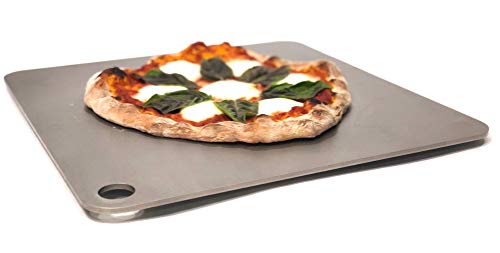
ThermiChef 16 x 16 in Pizza Steel, 3/8 in, 27.5 lb
$101.99
The same plate half again as thick, at 27.5 lb. It stores meaningfully more heat and recovers faster between pizzas, which is the only thing that matters if you are cooking for a group rather than for one.
Check price on Amazon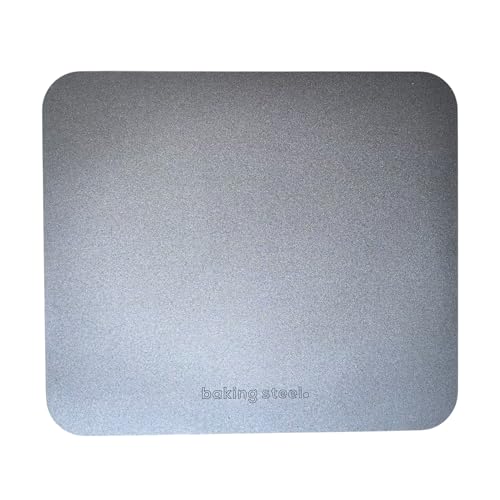
Baking Steel The Original Baking Steel, 14 x 16 x 1/4 in
$139.00
Smaller and nearly twice the price, and it arrives hand seasoned and ready to cook on. If you would rather not season a plate yourself, that convenience is what the difference buys.
Check price on Amazon
Unicook 15 x 15 in Square Cordierite Pizza Stone, 8 lb
$45.99
Cheaper again, and less than half the weight at 8 lb, which matters if the surface has to come in and out of the oven. Cordierite browns a base more gently than steel and it can crack from thermal shock, so it is a different tool rather than a lesser one.
Check price on AmazonWhere it fits in the rest of the kit
Thickness is the only specification on a steel that changes the cooking, and the decision turns on how many pizzas you make in a row rather than on how good you want one to be. The pizza steel roundup works through the thickness question in detail, and stone versus steel covers the material choice for anyone still weighing cordierite. If pre-seasoned matters more than area, the Original Baking Steel is the convenience option at $139.
Whatever plate you end up with, the preheat is what most people get wrong: steel lags the air in the oven by a long way, and an oven that beeps ready is nowhere near ready. Work the timings out on the bake temperature and time calculator, and if the base is still pale after a proper preheat, the crispy base guide works through the causes in order. A probe thermometer will not read the plate, so if you want to know its surface temperature you need an infrared gun rather than a probe.
Keep reading
- Pizza stone vs pizza steel
- Best pizza steels, by tier
- Cast iron pan vs baking steel
- Bake temperature and time calculator
- The Original Baking Steel review
- Why is my pizza base not crispy?
This review draws on published specifications, manufacturer figures and the consensus of verified owner reviews. We have not tested this product ourselves, and we say so rather than implying otherwise. As an Amazon Associate we earn from qualifying purchases.
Frequently asked questions
What thickness of pizza steel should I buy?
Quarter inch for most people, 3/8 inch if you cook several pizzas in a row. Thickness sets how much heat the plate stores, and stored heat is what replaces the energy the first pizza takes out of the surface. One pizza at a time, quarter inch is plenty and it is 10 lb lighter. Four pizzas back to back, the thicker plate holds its surface temperature far better. Thinner 3/16 inch plates are easier to handle and best for single thin crust pizzas.
Will a 16 inch pizza steel fit my oven?
Measure the interior depth before ordering. A 16 by 16 inch plate fits comfortably on most full size oven racks and does not fit many compact, apartment sized or European ovens, which is why ThermiChef recommends the 14 inch version for those. You also need clearance for air to move around the plate, so a steel that touches the oven walls on both sides is too big even if it technically goes in.
How do you season a pizza steel?
Wash it to remove any manufacturing residue, dry it completely, apply a very thin coat of a neutral oil and wipe most of that off again, then bake it at around 375F for an hour and let it cool in the oven. ThermiChef publishes exactly that procedure. After the first seasoning it builds a natural patina with use, in the same way cast iron does, and it needs no further attention beyond not being stored wet.
ThermiChef or the Original Baking Steel?
ThermiChef if you want the most cooking area per dollar and do not mind seasoning it. The Baking Steel if you want it hand seasoned and ready to use out of the box. The steel itself performs the same in both cases, because it is the thickness and the area that do the cooking. At $73.99 against $139, the ThermiChef is the value choice and the Baking Steel is the convenience one.
Can I use a pizza steel on a grill?
Yes, and it is one of the better reasons to own one. Low carbon steel handles direct flame without warping, and a covered grill will comfortably exceed the temperature a domestic oven reaches, which moves you closer to a real pizza oven bake. It also works as a flat top griddle surface. Never pour water on a hot steel, and use long handled tools and rated gloves, because the plate stays dangerously hot for a long time after the heat goes off.
How we choose: we compare published manufacturer specifications, verified owner reviews, and long-established baker's percentage practice. We do not test gear in person. Dough figures are guidance, not a recipe guarantee: flour, water and room conditions all vary, so read your dough as well as the numbers.
Heat safety: a pizza oven at working temperature holds a 700F to 950F floor and a shell hot enough to burn on contact. Use long-handled peels and heat-rated gloves, keep children and pets clear, burn fuel outdoors only with clearance from anything combustible, and never pour water on a hot baking stone. Water flashes to steam instantly and thermal shock cracks stone.
Keeping your own dough and bake numbers? The Dough & Oven Planner is the paid version of these pages: 8 printable worksheets you fill in with your own numbers, plus the full PDF, $29.